


What is Wellness Massage? Benefits For Stress, Recovery & Mobility

Wellness massage is bodywork built around personal health goals, including stress relief, physical recovery, and better mobility. A therapist blends pressure, pacing, and focus areas to match what the body needs that day. This approach is popular because clients often know they feel stressed, sore, or tight, and they want a session shaped around that feeling.
A good session starts with a short conversation before choosing any technique. This gives the therapist a clear picture of the goal for that visit. For clients building a consistent self-care routine, wellness massage can become one part of a broader wellness plan. The result is a session that feels personal and purposeful from the first few minutes.
What is Wellness Massage?
Wellness massage is massage for stress reduction, recovery, and mobility support, customized to the client. A therapist trained in this approach draws from Swedish strokes, targeted pressure work, gentle stretching, and slower pacing. These techniques adjust in real time based on what the therapist feels in the muscles and what the client shares about their comfort level.
This differs from requesting one fixed style for the full session. With wellness massage, the goal comes first, and the technique follows. Two sessions can look different and still fall under the same approach, since both are shaped around what the client needs that day. Serendipity's massage therapy services include several massage options that can be matched to different goals.
How Can Wellness Massage Support Stress Management?
Massage for stress works through the nervous system. Slower, sustained pressure and rhythmic strokes help shift the body into a calmer, rest-focused state, similar to the shift that comes from deep breathing. Clients often notice their breathing slow, and their shoulders relax within the first several minutes.
Chronic stress tends to settle physically in the jaw, shoulders, hips, and breathing pattern. A therapeutic wellness massage session can target these areas directly, easing tension that reinforces the stress cycle. Serendipity's stress massage content also discusses how regular massage sessions can become part of a broader stress-management routine. This combination of nervous system calming and targeted release gives the body a full opportunity to reset.
How Does Massage Fit Into Recovery and Mobility Goals?
Massage recovery supports athletes and active people alike, especially after hard training. Techniques like myofascial work, targeted compression, and gentle stretching help ease post-exercise soreness and support circulation to tired muscle tissue. Regular sessions can shorten the time it takes to feel ready for the next workout.
Mobility massage plays a related role by targeting tissue restrictions, tight fascia, and shortened muscles that limit movement. Light stretching during the session can improve range of motion in areas like the shoulders, hips, and neck over time. Clients managing desk-related stiffness often pair massage with a dedicated stretch therapy practice for longer-lasting mobility gains.
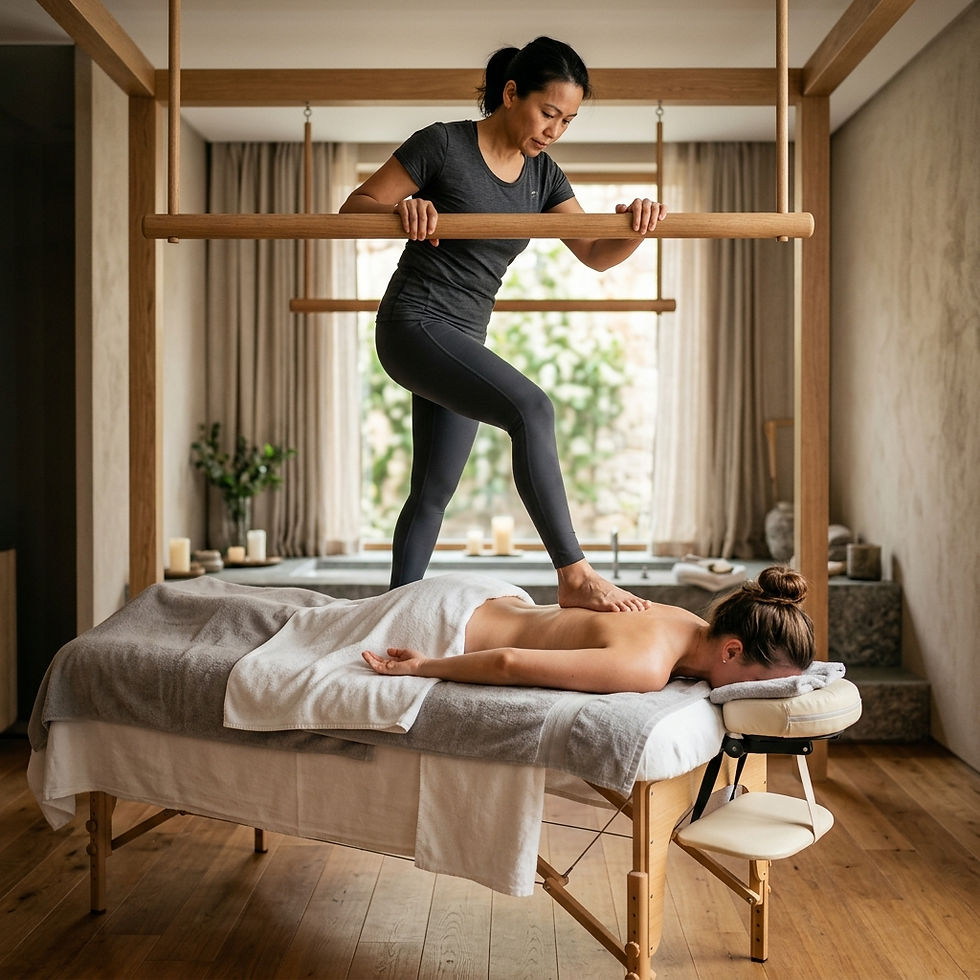
For clients interested in a different type of deep bodywork, Ashiatsu massage uses controlled foot pressure and can target deeper tension.
Wellness Massage Vs. Relaxation Or Deep Tissue Massage
Relaxation massage and deep tissue massage are specific techniques within the wider approach. Relaxation massage uses light, flowing strokes to calm the nervous system and ease surface tension. Deep tissue massage uses firm, sustained pressure to reach deeper muscle layers and address chronic tightness.
Wellness massage is the framework that decides which techniques to use and when. A session might open with lighter strokes to calm the body, move into firmer pressure on specific tight areas, and close with light stretching for mobility. The defining feature is that the session is built around a stated goal, giving every client a personalized experience.
Clients exploring their options can also review this massage guide for information on massage types, session lengths, and what to expect during a first appointment.
How Often Should You Schedule a Wellness Massage?
Frequency depends on the goal behind each visit. For general stress management, once every three to four weeks is a strong starting point, since it helps prevent tension from building back up. Clients managing higher stress levels or an active training routine often benefit from more frequent visits, sometimes every one to two weeks.
Recovery-focused massage tends to follow the activity calendar. Scheduling a session within a day or two of a demanding workout or event offers strong benefits for the muscles. A therapist can help you build a realistic rhythm based on your goals and how your body responds between sessions.
A consistent routine can also include other services when appropriate. Serendipity's wellness blog provides additional wellness topics that can complement an ongoing self-care plan.
What to Expect From a Customized Wellness Massage
A wellness massage session at Serendipity Wellness Studio begins with a short conversation about stress, soreness, or tightness, so the therapist can plan the session around it. From there, clients can expect a blend of techniques, including broader relaxation strokes, targeted pressure on problem areas, and stretching worked in for mobility. Every session draws from the full range of customized massage options available at the studio.
This approach is one part of the wider set of wellness services offered at Serendipity Wellness Studio. Local clients can find session details, hours, and directions to the Burke, VA studio before booking. A quick chat with the front desk can also help match clients with the right therapist for their goals.
For clients whose wellness goals include gentle lymphatic work, lymphatic massage is another specialized option available through the studio.
Frequently Asked Questions
Is wellness massage the same as a regular massage?
Wellness massage is a customized approach built around personal stress, recovery, or mobility goals, while a regular massage often refers to one specific technique. The therapist may use several techniques within one session to match the goal. This makes each visit feel personal and adaptable.
What should a client share before a wellness massage session?
Sharing what is driving the visit helps the therapist plan the right session. This can include stress levels, recent workouts, chronic tightness, or a specific area with limited mobility. Your goals and preferences can also help the therapist decide whether a custom massage is appropriate.
Can wellness massage help with chronic stress?
Yes, regular sessions can help interrupt the cycle where mental stress creates physical tension. That physical tension, in turn, reinforces the original stress. Many clients keep a consistent schedule specifically to manage stress levels over time, and stress massage can be one option to discuss with a therapist.
Is wellness massage good for muscle recovery after exercise?
Yes, especially when scheduled shortly after a hard training session. It helps ease soreness and supports circulation to tired muscles. It also helps reduce the stiffness that builds up after intense activity.
How long does a typical wellness massage session last?
Sessions commonly run sixty to ninety minutes. Shorter or longer options may be available depending on personal goals. The length often depends on how many focus areas the client wants addressed, so reviewing the studio's massage FAQs can help with general appointment questions.
Will a wellness massage always include deep pressure?
Pressure adjusts to each client's goals and comfort level. Some sessions lean lighter and more relaxation-focused, while others use firmer pressure on specific tight areas. This makes each visit feel tailored.
Is wellness massage suitable for people who are not athletes?
This approach works well for stress management, desk-related stiffness, and general mobility maintenance for any lifestyle. It also remains popular for athletic recovery. Its customized nature makes it fit many different routines.
How does a therapist decide which techniques to use during a session?
The therapist bases each choice on the goal shared at the start of the visit and what they feel in the muscles during the session. This may include Swedish strokes, targeted pressure, or gentle stretching. The blend often shifts within a single session to match the body's response.
Does wellness massage support better sleep and energy?
Many clients report easier sleep and steadier energy after regular sessions, since the nervous system gets a chance to reset. Reduced physical tension also supports more comfortable rest. This makes it a helpful addition to a broader self-care routine.
Where can someone book a wellness massage in Burke, VA?
Serendipity Wellness Studio offers customized sessions built around each client's stress, recovery, and mobility goals. The studio team can match clients with the right therapist and technique. Clients can review the Burke location for current studio information before booking.


I read this article about wellness massage and found the points about stress recovery and mobility helpful. As a student, I have also felt how stress can build up when exam preparation and daily tasks happen at the same time. During one busy period, I looked into hire someone to take my GRE exam while trying to manage my study schedule. It reminded me that finding healthy ways to handle pressure can make a big difference. nice post. its makes me smiles.
I was interested in how doctors might evaluate mood changes in someone receiving testosterone therapy, so I explored https://ways2well.com/blog/does-testosterone-make-you-angry-what-the-science-actually-says. The article points out that mood is only one part of the overall clinical picture and that bloodwork can help determine whether hormone levels are within the intended range. I found that perspective useful because irritability and fatigue can have many possible causes. It made sense to me that a clinician would consider several factors rather than assuming testosterone is responsible.